

What is slip casting?
How liquid clay becomes a finished piece
Slip casting is a way of making ceramics by pouring liquid clay into a plaster mould. The plaster pulls the water out of the clay, so a solid layer builds up against the inside of the mould. Once that layer is thick enough, the leftover liquid is poured back out, leaving a hollow shape that's then dried, finished, and fired. That's the whole idea in one breath. Here's how it actually goes.
The slip
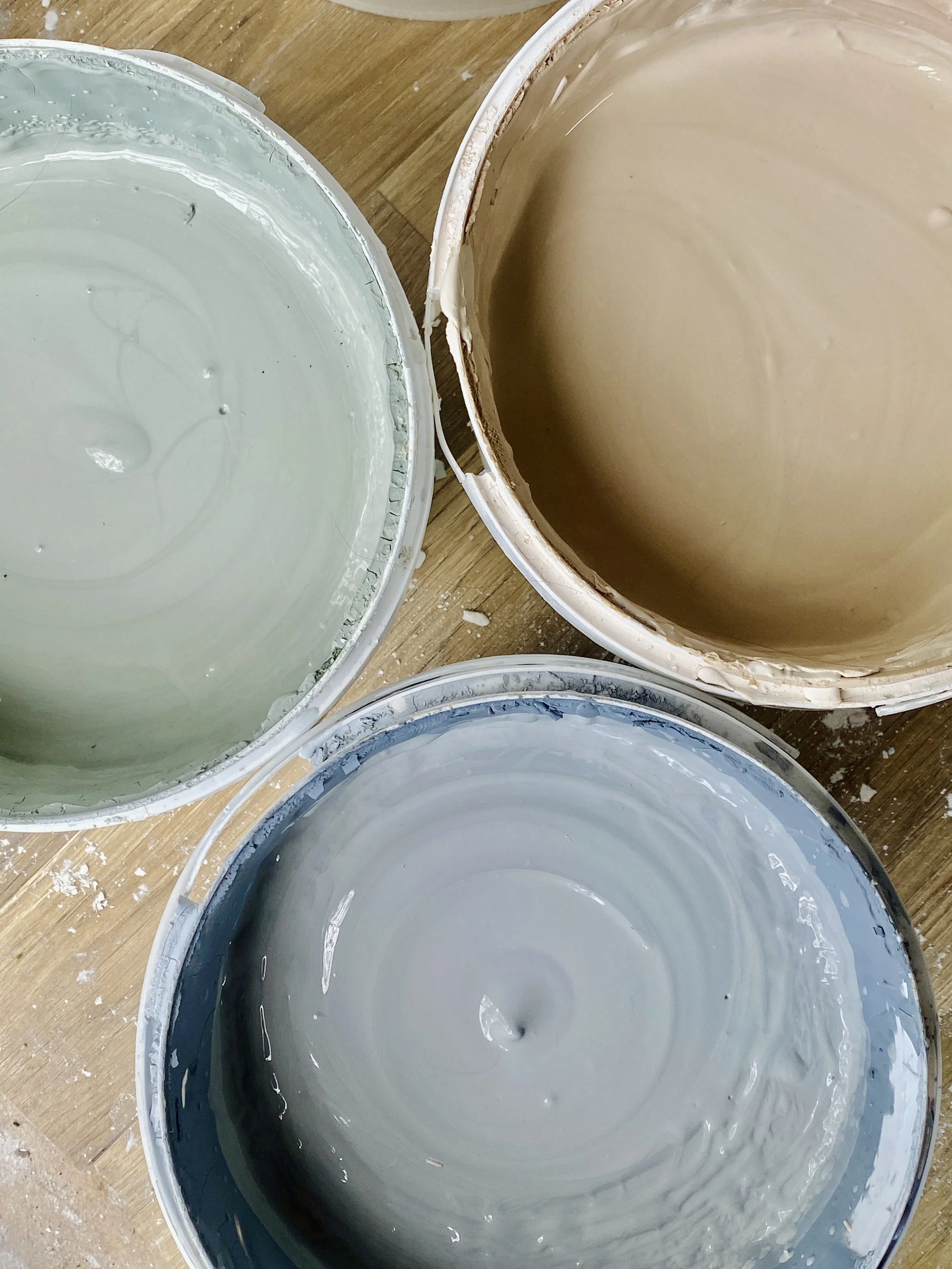
Slip is just clay in liquid form. We mix ours in-house: dry powdered porcelain, water, and a little of what's called a deflocculant, blended until it pours like thick cream. When a piece is going to be coloured, body stains are added at this stage, so the colour runs all the way through the porcelain instead of sitting on the surface. It gets sieved to catch any lumps, because anything left in the slip ends up in the piece.
The mould
The mould is made of plaster, which is porous and draws water out of the slip sitting against it. We make every mould ourselves, in-house, starting from a finished model. They often come in more than one part so the piece can be released cleanly once it's set.
The cast
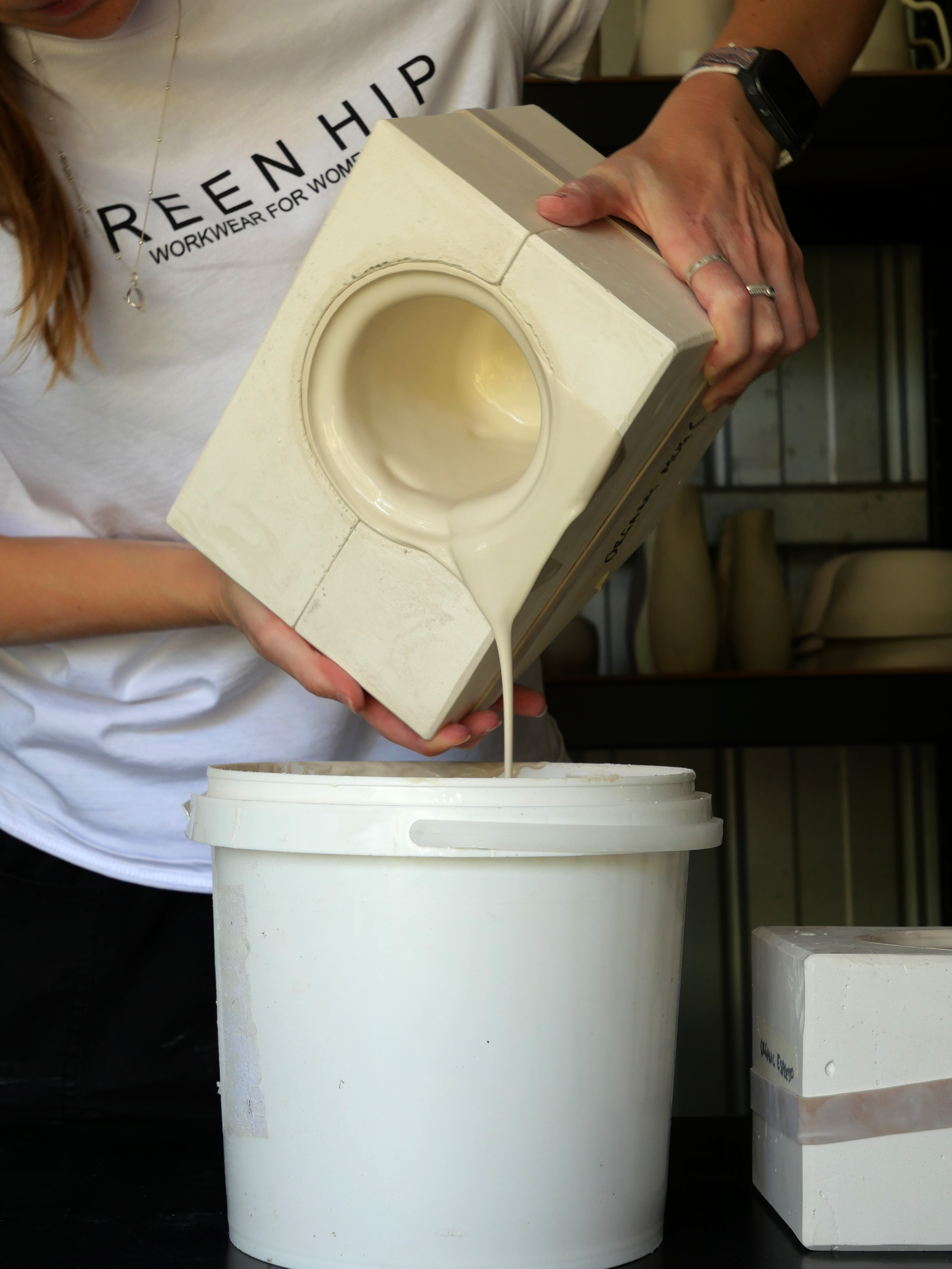
Slip gets poured into the mould and left to sit. Where it touches the plaster, water is drawn out and a skin of firmer clay starts to form against the wall. The longer it sits, the thicker that wall grows. When it's reached the right thickness, the remaining liquid is tipped back out, and what's left is a hollow lining of clay in the shape of the mould.
From there it firms up a little more and shrinks back from the plaster, which is how you know it's ready to come out. Opened up, the piece is firm enough to handle but still damp. At this stage it's called leather-hard.
Finishing and firing
Every piece is trimmed and sponged by hand, tidying the seams where the mould parts met and smoothing the rim. Then it dries out fully, which can't be rushed without cracking it. Once every trace of moisture is gone, it's called bone-dry, and only then is it ready for the kiln.
It's actually fired twice. The first firing, called the bisque fire, hardens the piece enough to handle safely without dissolving back into clay. We bisque fire to cone 06, a lower temperature than the final firing. From there, glaze is applied on the inside and the rim, with the outside left raw. The second firing, the glaze fire, takes it up to cone 10, around 1300°C, hot enough to turn the porcelain properly hard and dense, and to melt the glaze into a smooth, glassy surface.
Why use it
We use slip casting because it's good at holding a shape. A form you've spent time getting right can be cast again and again, with thin, even walls and clean lines that are hard to reproduce by hand or on a wheel. It doesn't come out the same every time, though. Hands leave marks as they work, and clay remembers them, so each piece carries its own small differences. What repeats is the considered shape, which makes it a natural fit for pieces that are designed first and made second.
People sometimes ask whether something made in a mould still counts as handmade. It's a fair question, and one worth its own answer. If you'd like to see what slip casting can make, have a look through the range at morphandmould.com.au.
