

Porcelain vs stoneware vs terracotta:
What's actually different, and why we use porcelain
Porcelain, stoneware, and terracotta get lumped together a lot, all clay bodies that end up as ceramics, as mugs, bowls, and plates on a table. But they're different materials, fired differently, and they behave differently once they're in daily use. Here's each one on its own terms, and why we chose porcelain for Morph & Mould.
Different clay, different heat
Terracotta is fired at a much lower temperature than the other two. It never fully vitrifies, so it stays porous unless it's glazed. That's also where its colour comes from: terracotta clay is naturally high in iron, which gives it that familiar red-brown tone straight out of the kiln. It's a material suited to plant pots, tiles, and rustic, decorative pieces more than everyday dinnerware, since an unglazed surface will absorb water and stain.
Stoneware is fired at a high temperature, and how vitrified it ends up depends on the specific clay body and where in that range it's fired. Fired to the top of that range, it can fully vitrify. At lower stoneware temperatures it stays a little more porous, and generally needs a glaze to hold water reliably. It tends to be thicker and more textured, with an earthy, rustic feel that comes from a coarser clay body.
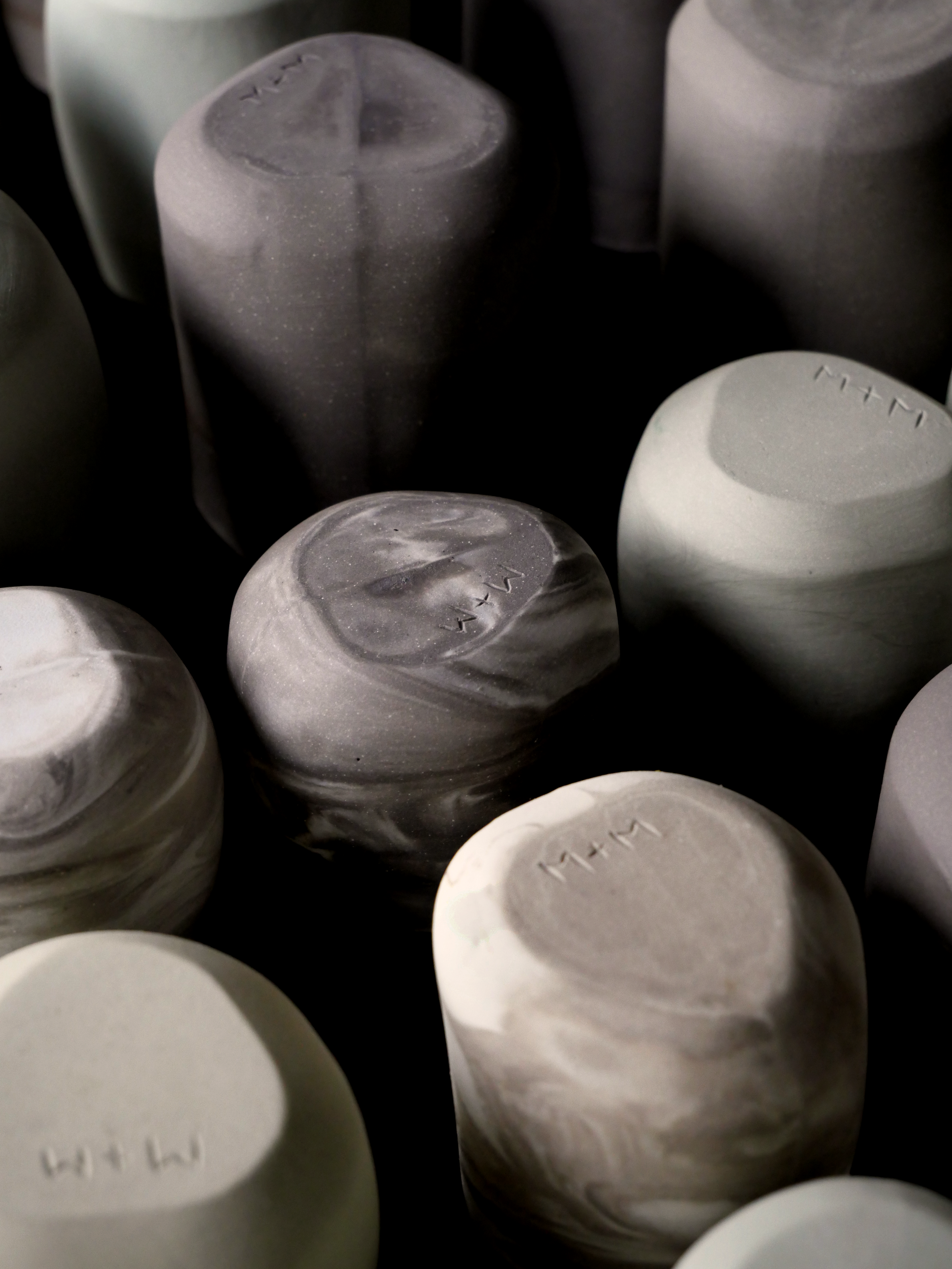
Porcelain is fired higher still, hot enough that the clay fully vitrifies: the particles fuse into something closer to glass than to earth. Fully vitrified, it's non-porous through and through, which is why it doesn't absorb moisture, stains, or odours. That same firing is why it looks the way it does too: bright white, fine grained, and capable of being worked thin without losing its strength.
Durability, but different kinds
Terracotta, never fully vitrified, is the least durable of the three for everyday use. It's more prone to chipping and cracking, and needs to be glazed and handled with care if it's going to hold food or liquid.
Stoneware holds up well day to day. Its thickness and weight make it forgiving of everyday knocks, a solid mug is hard to chip through sheer mass.
Porcelain's strength comes from the material itself rather than bulk, which is what lets it be shaped thin and light without being fragile. It's a genuinely hard, dense material once fired, it just doesn't have the sheer mass of a thicker piece to absorb a hard knock.
None of the three is simply "better." Terracotta earns its place in garden pots and rustic, decorative pieces where its warmth and texture are the whole point. Stoneware suits heavy daily use, a busy kitchen where mugs and bowls get knocked around without much ceremony. Porcelain suits a piece meant to be handled properly and appreciated a little, which for most people covers plenty of daily use too.
Why we chose porcelain
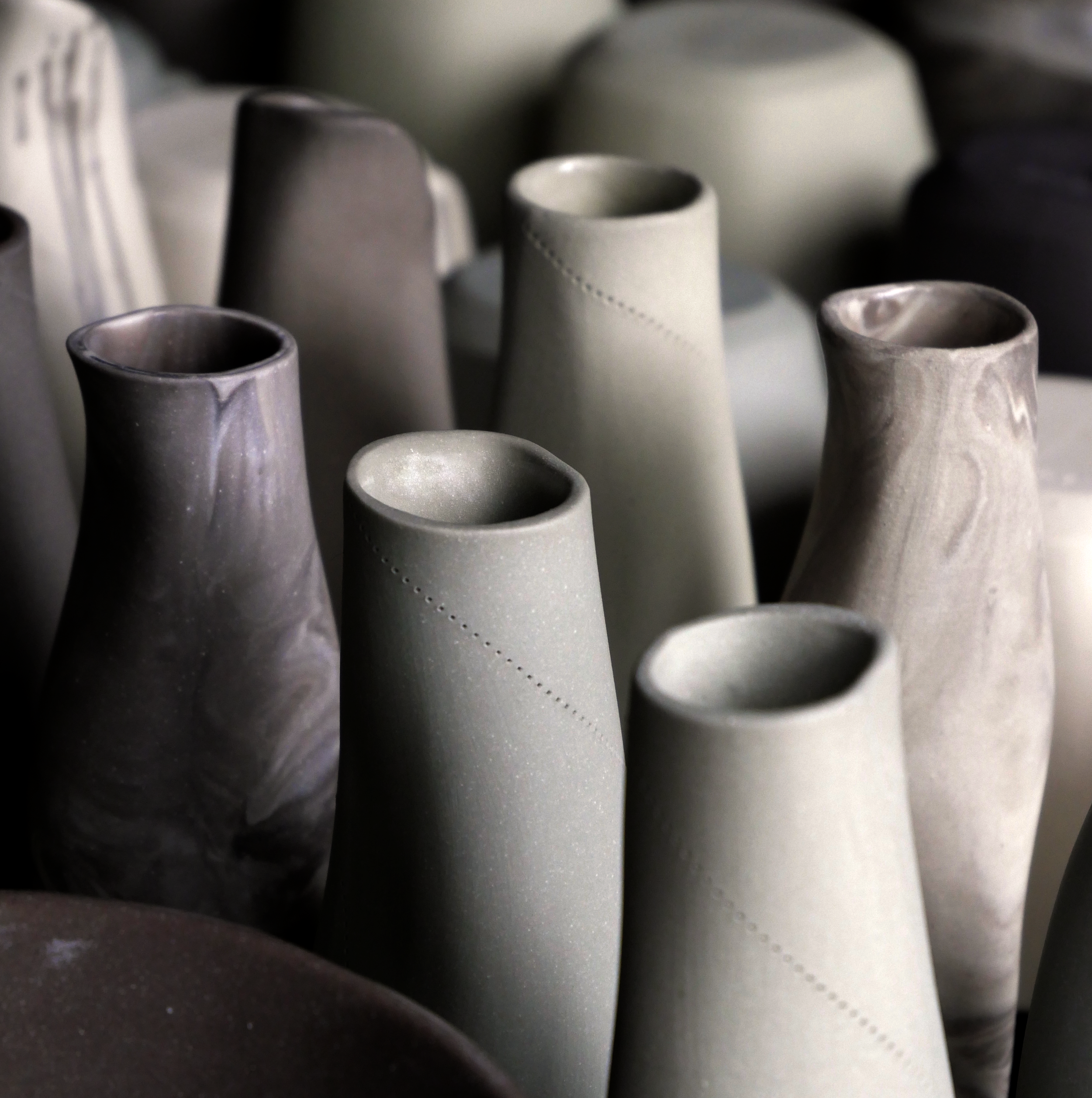
For us, it came down to what porcelain lets a design actually do. It holds a fine, clean line and a thin wall, which matters when a shape is designed down to the proportion of a rim or the curve of a handle. It's also genuinely strong for something that fine, and it takes colour cleanly through the body itself, via the stains we mix in, rather than needing a glaze to carry it. That mattered to us, because we wanted the porcelain to be seen and felt, not covered up. It's why the glaze only ever goes on the inside and the rim, and the outside is left raw. That's the material we needed to make pieces that are precise, considered, and light in the hand.
If you'd like to see what that looks like, Explore the collection.
